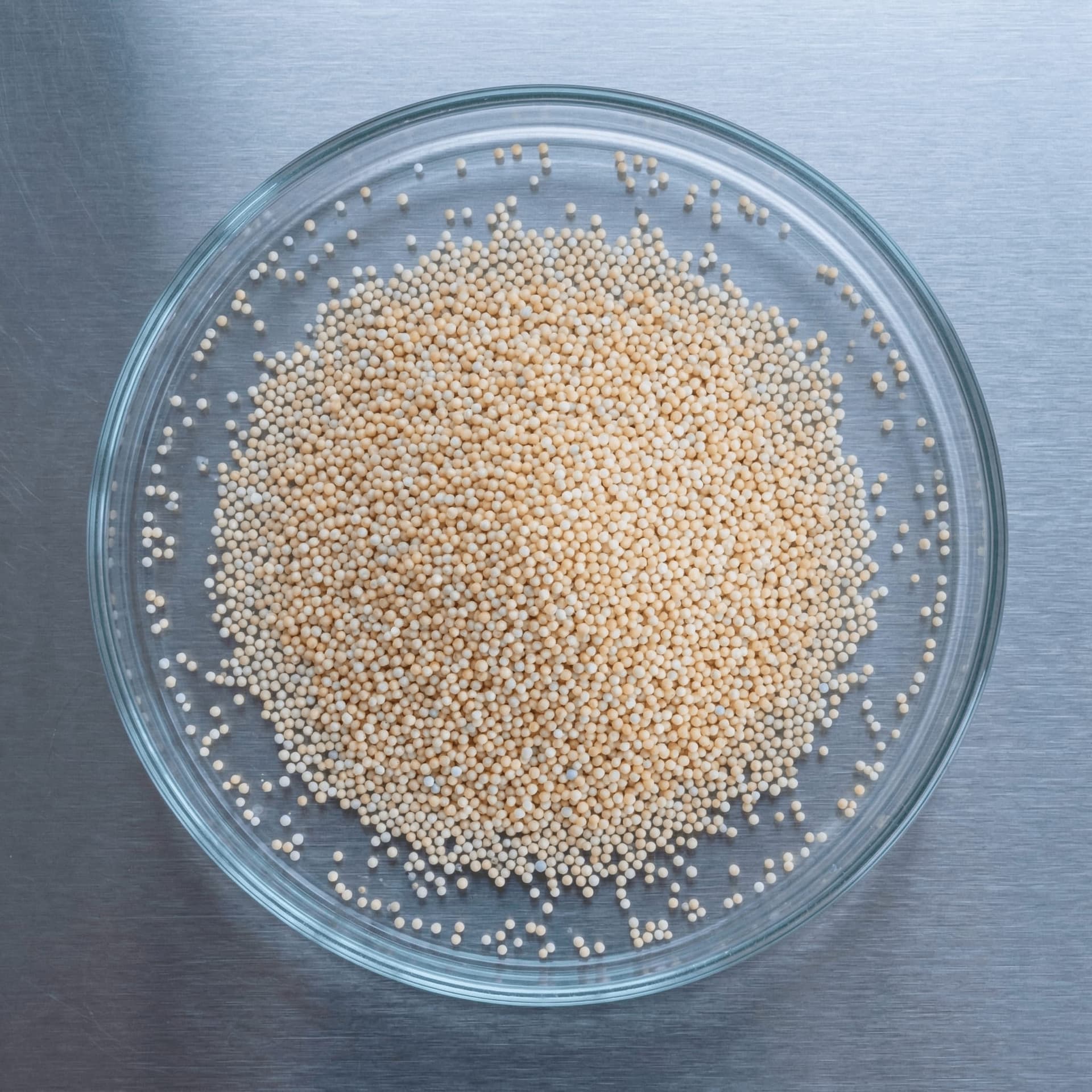
What is Folate (Folic Acid)?
Has a role in the process of cell division and contributes to normal blood formation, normal homocysteine metabolism and the reduction of tiredness and fatigue. The synthetic form — the body must convert it to active 5-MTHF, a step a common MTHFR gene variant makes less efficient for some people.
Why Pteroylmonoglutamic Acid?
Folic acid (pteroylmonoglutamic acid) is the most stable and well-researched form of vitamin B9, reliably converted to active folate after ingestion and suitable for the majority of the population for everyday supplementation.
What are the benefits of Folate (Folic Acid)?
DNA synthesis & cell division
Folate is essential for the de novo synthesis of purines and thymidylate, the building blocks of DNA. It is required by every dividing cell, making it especially important for rapidly regenerating tissues.
Red blood cell production
Folate works alongside vitamin B12 to support the normal synthesis of haemoglobin and the maturation of red blood cells, contributing to normal red blood cell formation.
Homocysteine regulation
Folate is the primary methyl donor in the remethylation of homocysteine to methionine, contributing to normal homocysteine metabolism.
Supports
Tap any underlined tag to see the full authorised health claim wording. Food supplements should not be used as a substitute for a varied and balanced diet and a healthy lifestyle.
Related ingredients